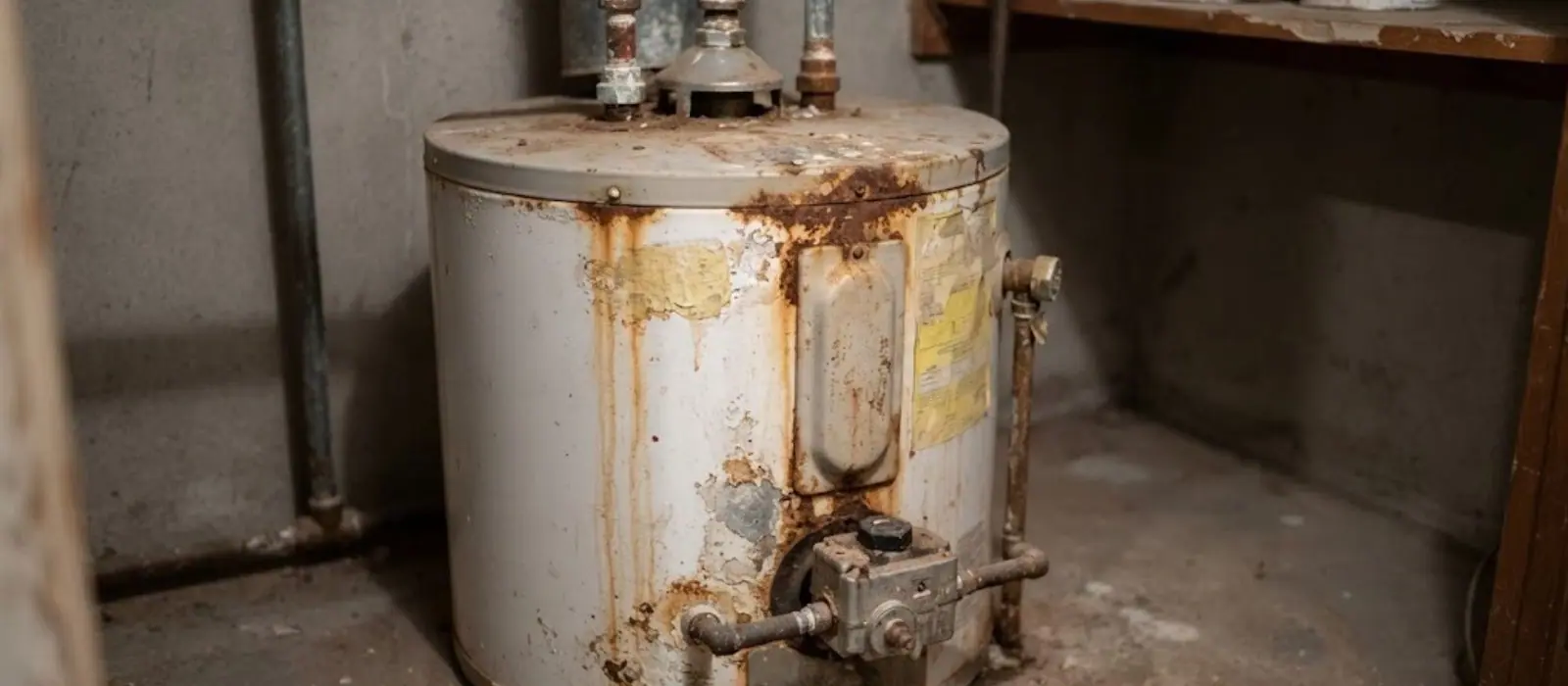
A water heater that has failed completely usually announces itself with water on the garage floor or a laundry room full of steam. Close the cold supply valve on top of the tank, switch off gas or power, and call (805) 249-7135. Our line is staffed 24/7, and a replacement visit can often happen the same day so the household is not without hot water for long.
This page explains how a replacement works, how to pick the right size and fuel type, and what to ask any installer before the old tank leaves the house.
Emergency replacement: the first hour
The first hour is about limiting damage. Shut the cold water supply, cut the energy source, and drain the tank slowly through the hose bib at its base if water is still pooling. Move anything valuable off the floor, because a 40 or 50 gallon tank can release a lot of water.
If the unit sits in a closet inside the living space, check the ceiling below and the wall beside it for dampness. Photographs taken now help if you later file an insurance claim for the water damage.
Sizing the new heater to the household
Capacity depends on how many people shower in the same morning window, not on house square footage. A couple can often live with a 40 gallon tank, while a family of five usually wants 50 or 75 gallons or a high-recovery model.
The first-hour rating on the unit label matters more than the tank size alone. It tells you how much hot water the heater can deliver after sitting full, and a plumber can match it to your actual routine.
| Household | Typical tank size | Notes |
|---|---|---|
| 1 to 2 people | 30 to 40 gallons | Short showers, one bathroom. |
| 3 to 4 people | 40 to 50 gallons | Most common single-family choice. |
| 5 or more people | 50 to 75 gallons | Consider a high-recovery or hybrid unit. |
| Home with a soaking tub | 50 gallons or more | Tub fill drains the tank quickly. |
Gas, electric, hybrid or tankless?
Replacing like for like is fastest, because the gas line, vent or electrical circuit is already in place. Switching fuel types means new connections, a permit question and often a longer visit.
A hybrid heat pump heater uses far less electricity but needs clearance and a drain. If you are weighing tankless, read about tankless water heater service, and for a planned swap that is not an emergency, water heater installation covers the setup in detail.
Standing water around the tank? Call (805) 249-7135 and ask about a same-day replacement window.
What a good replacement includes
The 2003 San Simeon earthquake struck on December 22 and caused two deaths in Paso Robles, which is why strapping is not an optional extra in this area. Ask your installer how the tank will be braced, and ask the City of Paso Robles building department whether your project needs a permit, since rules can vary.
- New flexible connectors or copper fittings, not the old corroded ones.
- A new temperature and pressure relief valve with a proper discharge pipe.
- An expansion tank where the system needs one.
- Earthquake strapping to the wall studs, which matters on the Central Coast.
- Hauling away the old unit and flushing the lines before turning the new one on.
Warranty, age and when a younger heater fails
A heater that fails within a few years is often covered by the manufacturer. Keep the model and serial numbers from the data plate, and photograph them before the old unit leaves. Warranty terms usually cover the tank but not labor.
If the failure came from a sticking relief valve or a high-pressure plumbing system rather than a defective tank, an expansion tank or pressure regulator may be part of the fix. A good installer measures the house water pressure before recommending either.
Standards and permits for a replacement
New gas storage heaters are made to ANSI Z21.10.1 and electric ones are listed to UL 174. The California Plumbing Code, Title 24 Part 5 of the California Code of Regulations and based on the Uniform Plumbing Code (UPC), governs plumbing work in the state. Ask the installer how the new tank will be braced and whether your city or county wants a permit and inspection.
What to do when the tank fails
A failed tank can mean hot water, gas or electricity in the same room, so slow down.
- Close the cold supply valve above the tank.
- Turn gas to off or switch off the breaker.
- Do not touch the tank or the floor around it if water is near electrical parts.
- Do not relight a pilot if you smell gas, and leave the building.
- Keep people and pets away from a leaking hot tank.
What drives the cost of a replacement
Tank size and efficiencyLarger and more efficient units cost more up front and less to run.
Fuel switchMoving between gas and electric adds lines, vents or circuits.
Code itemsStrapping, relief piping and an expansion tank are part of a proper install.
Access and locationAttic, crawlspace and tight closets add labor.
Emergency timingA replacement started outside business hours is priced on the emergency schedule, which the plumber confirms before unhooking the old tank.
A heater that fails suddenly is often covered by homeowner insurance only for the water damage it causes. For your own figure, call (805) 249-7135 and the dispatcher will outline pricing before the plumber starts.
Questions people ask
A tank that has split at 2 a.m. does not have to wait for morning. The line takes calls through the night, and a replacement unit is arranged for the first available window. Close the cold inlet and the gas or breaker first.
A like-for-like swap usually takes a few hours once the new unit is on site. Fuel changes, new venting or relocation add time.
Permit rules vary, so ask the City of Paso Robles building department. A plumber can tell you what they normally see for your type of swap.
Often yes. Tanks that old are near the end of their typical life, and a planned swap avoids water damage and a rushed decision.
Yes, along the US-101 corridor. The Templeton and Atascadero pages cover what to expect in each.