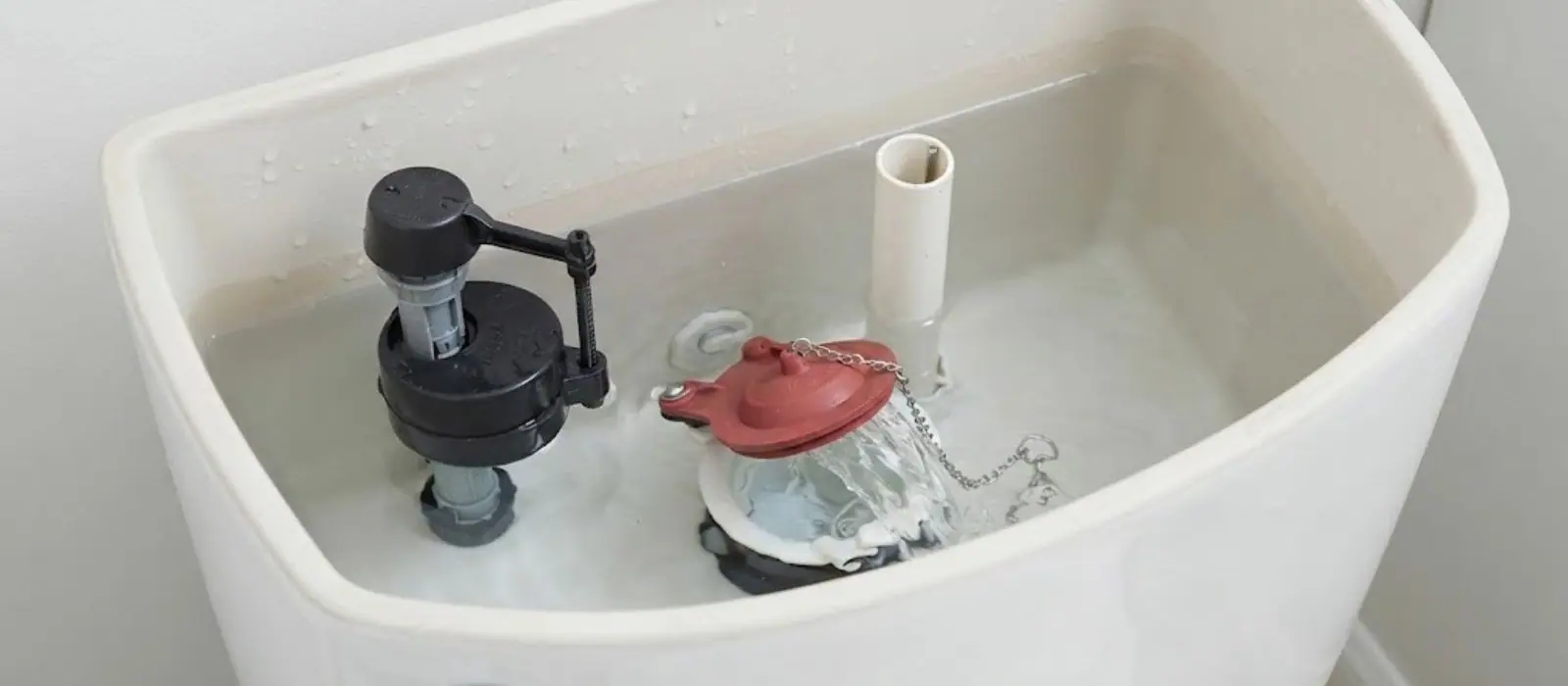
If water is rising in the bowl, turn the shutoff valve on the wall behind the toilet clockwise until it stops, lift the tank lid and push the flapper down. Then call (805) 249-7135. Dispatch answers 24/7, and same-day visits can be arranged for leaks and overflows.
Toilet repair covers clogs, running and phantom flushes, leaks at the base, weak flushes and replacement. This page walks through the usual causes and tells you what is safe to try yourself.
Toilet overflow emergency: stop the water first
- Turn the supply valve behind the toilet clockwise to close it.
- Lift the tank lid and press the flapper down to stop the refill.
- Put towels at the base and move rugs out of the bathroom.
- Do not flush again until the clog is cleared.
- If several fixtures are backing up, stop all water use and call about the main line.
Running toilets and phantom flushes
A toilet that hisses, refills on its own or never quite stops usually has a worn flapper, a corroded fill valve or a float set too high. The leak is small, but it can run for weeks. A single running toilet wastes noticeable water and shows up on the bill.
Check by adding a few drops of food coloring to the tank. If color appears in the bowl without flushing, the flapper is leaking. Replacing a flapper is the cheapest fix, and a fill valve is the next step.
Leaks at the base of the toilet
Water around the base can come from a failed wax ring, a loose closet bolt, a cracked bowl or a supply line. Water that appears only after flushing usually points to the wax ring or the flange below it.
A damaged flange can let the toilet rock and break the seal over and over. A flange repair ring restores a solid base. If the floor around it is soft, a bigger repair may be needed, and leak detection helps if the source is unclear.
Toilet overflowing or leaking at the base? Call (805) 249-7135 and tell dispatch what you see.
Toilet parts and repair kits
Hardware stores sell universal kits. They work on many toilets, but mismatched parts cause new leaks. A plumber matches the part to the brand and age of the tank.
| Part | Symptom when it fails | Typical repair |
|---|---|---|
| Flapper | Tank refills on its own | Replace the flapper. |
| Fill valve | Hissing or slow refill | Replace the fill valve. |
| Wax ring | Water at the base after a flush | Pull the toilet and reset with a new ring. |
| Flange | Rocking toilet, repeated leaks | Repair ring or replacement. |
| Supply line | Drip at the shutoff | Replace the line. |
Clogged and weak-flushing toilets
A plunger fixes most single clogs. A closet auger reaches deeper ones. If the toilet clogs again and again, the problem may sit in the drain line or the vent rather than the fixture, and a camera look shows what a plunger cannot.
If other fixtures gurgle when the toilet flushes, the blockage is past the toilet. See drain cleaning for main line signs.
Replacing an older toilet
Older toilets from the 1970s and earlier use much more water per flush than current models. If yours has cracks in the bowl, a rusted tank bolt or repeated repairs, replacement is often the better choice. We set the new toilet on a fresh wax ring, check the flange, and test for leaks before leaving.
Wall-hung and special-order toilets need their own planning, and our blog explains tankless-style installs for homeowners who want a closer look. For work that includes new rough-in, plumbing installation covers it.
Water-saving labels and flush guidelines
Toilets with the EPA WaterSense label use 1.28 gallons per flush or less. When a repair replaces a flapper or fill valve, the manufacturer guidelines on the tank tell you which parts keep the toilet in that range. Ask the plumber to match them.
What to do before the plumber arrives
Overflowing water from a toilet may carry waste, so treat it with care.
- Close the supply valve behind the bowl.
- Lift the tank lid and lift the float to stop refilling.
- Keep children and pets out of the bathroom.
- Do not use bleach or chemical openers in the bowl.
- Wear gloves when you mop up and wash your hands afterward.
What toilet repair costs depend on
Repair typeA flapper or fill valve costs less than a wax ring reset.
Flange or floor conditionA damaged flange or soft subfloor adds work.
Fixture typeTwo-piece toilets and wall-hung models differ.
AccessTight bathrooms and second-floor locations add time.
TimingLate-night overflow calls are billed on a different schedule than daytime repairs.
Insurance may cover sudden water damage from an overflow but not the toilet itself. For a firm figure on your toilet, call (805) 249-7135 and ask dispatch to explain the process.
Questions people ask
A toilet overflowing at bedtime is exactly what the night line handles. Close the valve behind the bowl, lift the tank lid and stop the float, then call.
The flapper or fill valve is usually leaking. Food coloring in the tank confirms it.
It can break the wax seal and leak into the floor. Tighten the bolts gently, and call if it keeps rocking.
Repair if the porcelain is sound and parts are simple. Replace if the bowl is cracked or repairs keep coming.
Yes. Toilet calls reach both towns, and the Templeton and Atascadero pages explain coverage.