
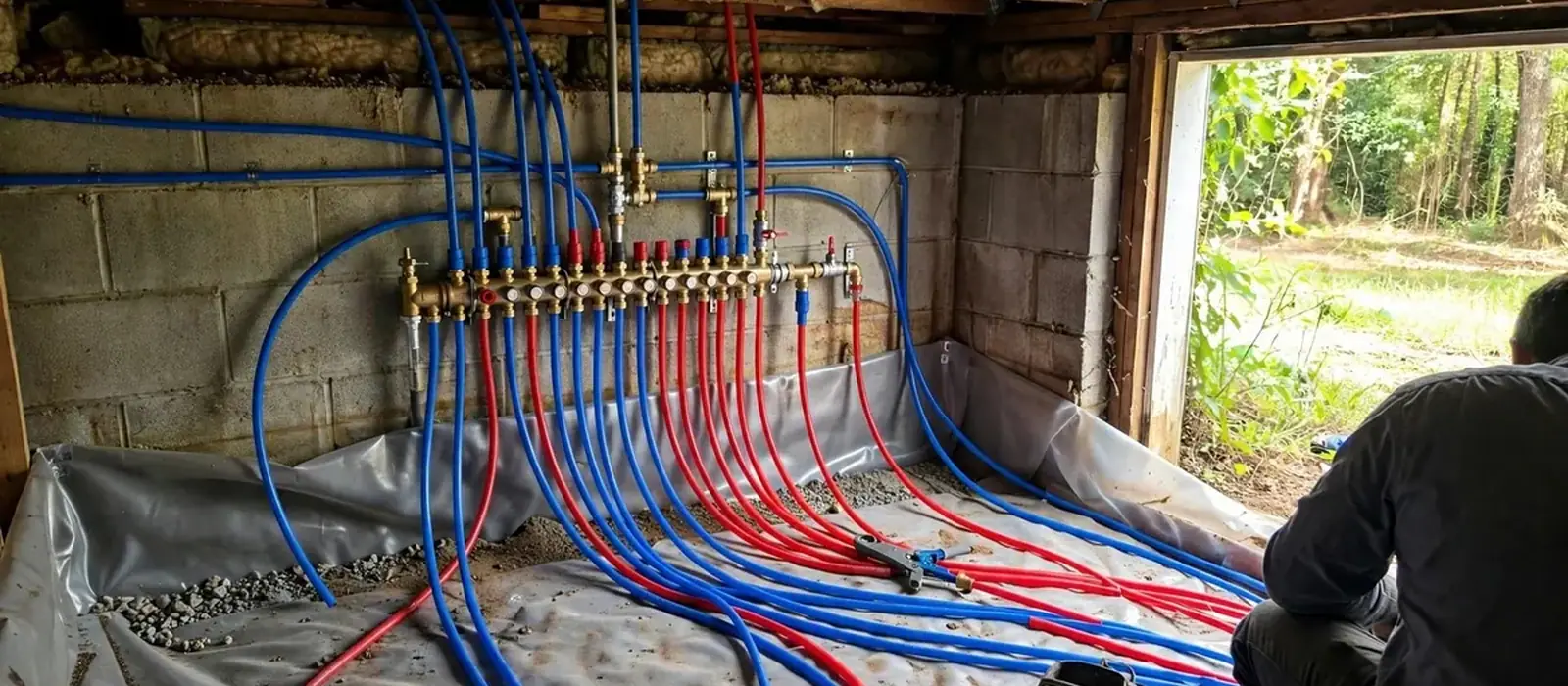
Repiping replaces the water supply lines inside a house, from the main to every fixture. It is a planned project, not an emergency. People consider it after a second or third pinhole leak, after noticing brown water, or when buying an older home with original pipes.
Call (805) 249-7135 to talk through the scope. If a pipe is leaking now, burst pipe repair is the first stop, and repiping can follow.
Signs your supply lines are wearing out
- Two or more pinhole leaks in different spots within a few years.
- Brown or orange water when a tap runs after sitting idle.
- Low pressure that has slowly worsened.
- Green stains or crusting at copper joints.
- Galvanized steel pipe with visible rust at fittings.
Which pipe materials do homes here have?
Homes built in different decades carry different pipe. Galvanized steel dominated before the 1960s and rusts from the inside. Copper became the standard afterward and can develop pinhole leaks from aggressive water or flux. Some homes from the 1980s and 1990s used polybutylene, a gray plastic that many plumbers replace on sight.
Newer builds use PEX, which resists freezing and scale and is easier to run through walls. Seeing the pipe in your own house tells a plumber which of these you have, and the plumbing installation page covers PEX work for new construction.
| Material | Common era | Typical issues |
|---|---|---|
| Galvanized steel | Before about 1960 | Internal rust, low flow. |
| Copper | Mid-century to present | Pinholes from corrosion. |
| Polybutylene | Late 1970s to mid 1990s | Brittle fittings, failures. |
| CPVC | 1980s to present | Brittle with age or heat. |
| PEX | 1990s to present | Rare, mostly from poor installs. |
Repipe or keep patching?
One leak in an otherwise sound system is a patch. Repeated leaks, widespread corrosion or a pipe type with a known failure pattern call for replacement. Each patch carries a new wall opening, and the total starts to approach the cost of a repipe.
We examine the pipe, check the water pressure, and tell you honestly if a patch will do. If the answer is repiping, we walk through the plan before any wall is opened.
Seeing repeated pinhole leaks or rusty water? Call (805) 249-7135 to talk through repiping.
PEX or copper?
PEX is flexible, faster to install and resists freezing damage. Paso Robles averages around 64 days a year with lows at or below freezing, so freeze resilience is a real factor in some houses. Copper lasts a long time and holds up in sunlight, but costs more in material and labor.
We recommend based on your house, your budget and local conditions. Either can be a good choice.
What a repipe looks like
A typical house takes a few days. We shut off the water, map new runs, open small access points in walls and ceilings, install the new lines, and connect fixtures. Water is restored by day end in most cases so the household is not without it for long.
Drywall patching and paint are separate trades. We tell you where the openings will be and how to schedule the repairs. Planning the repipe before a remodel can save double work.
How a repipe is staged to limit disruption
A repipe does not have to turn the house upside down. The plumber usually works room by room, opening small access holes at the ends of each run and fishing new lines through the walls. Water is off for part of the day, and a temporary supply to a hose bib or a single fixture is often possible.
Ask about the sequence before the day. Move furniture away from walls, clear under sinks and plan where the household will wash and cook. Drywall patches follow the plumbing, and painting is a separate step you schedule afterward.
Pipe standards a repipe must meet
A repipe follows the California Plumbing Code, based on the Uniform Plumbing Code (UPC), which lists approved pipe materials and sizing for supply lines. Ask what material is proposed, whether it is listed for potable water and what warranty the manufacturer attaches.
What repiping costs depend on
House size and layoutMore fixtures and floors increase materials and time.
Pipe materialPEX typically costs less than copper.
Wall accessSlab, two-story and finished-wall homes take longer.
Fixture countBathrooms, kitchens and laundry each add runs.
RestorationDrywall and paint are priced separately.
Insurance generally does not pay for a repipe, only for sudden damage. For a clear plan, call (805) 249-7135 and a dispatcher will explain how a repipe quote works.
Questions people ask
A typical house takes a few days. Larger or multi-story homes take longer.
Usually not. Water is restored at the end of each work day in most cases.
Yes. Sometimes only the kitchen and bath lines need replacing, and a partial repipe can address that.
PEX is widely used for potable water. Choose a plumber who uses fittings made for it.
Yes. Whole-house repipes are quoted in both towns, and the Templeton and Atascadero pages describe the housing in each.