
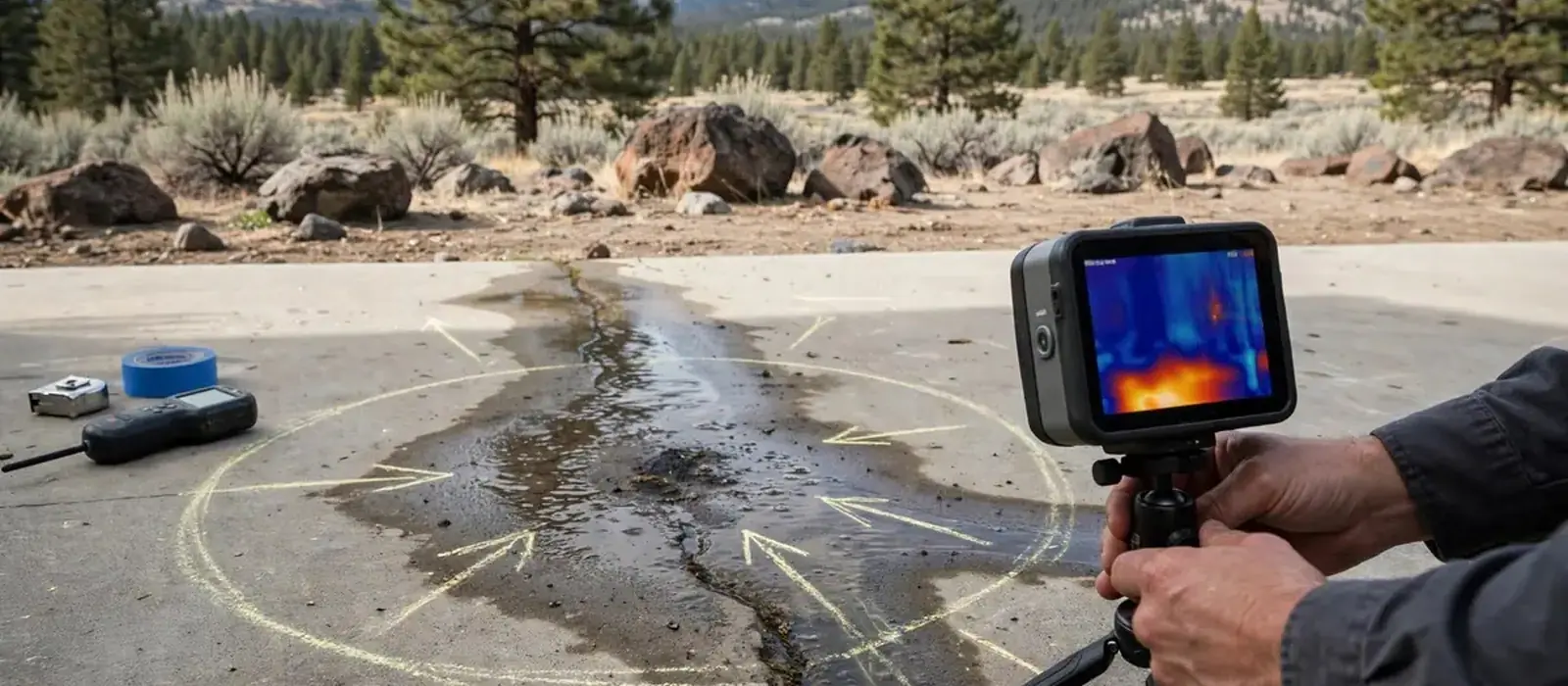
Warm patches on a floor, a hissing sound at night, or a bill that suddenly doubles can all mean a leak under the slab. Close the main shutoff valve and call (805) 249-7135. A dispatcher is on the line at any hour, and a same-day visit lets a plumber confirm the leak before more flooring is lost.
A slab leak is a break in a water line that runs through or beneath the concrete foundation. This page explains how we find it, how it is repaired, and what to do while you wait.
Slab leak emergency: first steps
- Close the main water shutoff at the house or the meter.
- Turn off the water heater to avoid damaging it if the leak is on a hot line.
- Look for warm spots, wet flooring, bubbling baseboards or musty odors.
- Take a meter reading and photograph it.
- Keep furniture off wet floors and open windows to dry the room.
Signs of a slab leak
A hot-water slab leak raises the floor temperature and makes the water heater run constantly. A cold-water leak may show as a damp carpet edge, a persistent musty smell or a spinning meter with every fixture closed. Hissing sounds at night are another sign.
These symptoms can also come from a wall or ceiling leak, so a plumber confirms with listening gear before breaking concrete. Leak detection covers the broader process.
Is a slab foundation common here?
Many Paso Robles homes are built on slab-on-grade foundations, while older homes may have raised floors over a crawlspace. We do not assume. A plumber checks your house, because the approach differs. Slab leaks require locating the pipe path beneath the floor, and crawlspace leaks can be reached by crawling beneath.
The 2003 San Simeon earthquake, magnitude 6.5, shook the area on December 22 and opened a sinkhole at the Paso Robles city hall and library parking lot. Ground movement can stress buried pipe, so a house that has seen strong shaking is worth checking if leaks appear.
Warm floor or meter running? Call (805) 249-7135 and tell dispatch which room.
How slab leaks are repaired
Rerouting avoids breaking the slab and gives you a new line in the walls and attic. Spot repair is quicker but may leave an old pipe that will leak again. A plumber should lay out both choices before cutting concrete.
| Method | How it works | Best for |
|---|---|---|
| Spot repair under the slab | Break the concrete at the leak, repair the pipe, patch | One accessible leak. |
| Reroute | Abandon the slab line and run new pipe overhead or in walls | Repeated leaks or an old line. |
| Epoxy lining | Coat the inside of the pipe | Some copper lines with small leaks. |
Insurance and documentation
Take photos of the damage, the meter and the leak location. Keep invoices from the leak locator and the repair. Many insurance policies cover resulting damage but not the pipe itself. Call your insurer before major work so the claim is documented.
If the leak is outdoors on the street side of the meter, the water utility may be involved. In that case water line repair explains the next steps.
Living with a slab leak until the repair day
If you suspect a slab leak, close the main and use water only when you must. Open the main briefly for cooking or flushing, then close it again. A leak under a concrete floor does not heal, and running water just widens the damage.
Check the floor in the room above the suspected line, since warm patches and damp carpet help locate it. Photograph any stains and keep the water bill. Both help when a plumber narrows the location and when an insurer asks when the problem began.
Codes and standards for slab repairs
The California Plumbing Code, Title 24 Part 5 of the California Code of Regulations and based on the Uniform Plumbing Code (UPC), governs plumbing work in the state. Repairs under a slab have to meet its rules for approved pipe and joints. Insurers often ask for a written locate report, so ask for one that names the method and the spot marked.
What slab leak repair costs depend on
Leak locationAccessible spots under tile cost less than spots under cabinets.
MethodSpot repair, rerouting and lining each price differently.
Floor typeTile, wood and carpet affect restoration.
Pipe conditionA worn line may need more than one repair.
TimingLocating a leak after hours carries an emergency rate, quoted before work begins.
Insurers typically cover resulting damage but not the pipe. Ask yours. For a plan for your house, call (805) 249-7135 and a dispatcher will explain the first steps.
Questions people ask
Yes, and the first step is the same at any hour: close the main. The night line can then book detection gear for the next free window, since a slab leak is usually located by listening, not guessed.
Listening gear, thermal imaging and pressure tests narrow the spot before any concrete is cut.
Often yes once the main is shut and the leak is isolated, but water to fixtures may be limited until repairs are done.
Often the resulting damage, but not the pipe. Check your policy.
Yes. Slab leaks occur in both towns, and the Templeton and Atascadero pages describe coverage.