
A water heater should hum quietly. When it starts to pop, rumble, hiss or bang, something has changed inside. Most noises come from sediment on the tank bottom or from pressure problems, and both are fixable if caught early.
This guide explains each sound and what to do. If the tank is leaking, skip to water heater repair and close the cold supply to the tank.
Popping and rumbling: sediment
Water carries minerals, and some settle as sediment on the bottom of the tank. In a gas heater, the burner heats the tank from below, trapping a layer of sediment under water. Steam bubbles break through the layer and cause popping.
An electric heater with lower element buried in sediment makes a similar sound. Sediment also reduces efficiency and shortens tank life because the burner works harder to heat the water.
Hissing, ticking and banging
Hissing can mean water dripping onto a hot burner or element from a small leak. Ticking is often heat traps in pipes expanding. Banging when a faucet closes is water hammer, which can come from high pressure or a failed expansion tank.
If you hear banging, check the pressure with a gauge and see water heater repair. High pressure harms every fixture, not just the heater.
- Popping or rumbling: sediment on the tank bottom.
- Hissing: moisture on a burner or element, or steam.
- Ticking: pipes expanding and contracting.
- Banging: water hammer from pressure or a failed expansion tank.
- Whining: scale on an element or a restricted valve.
How flushing works
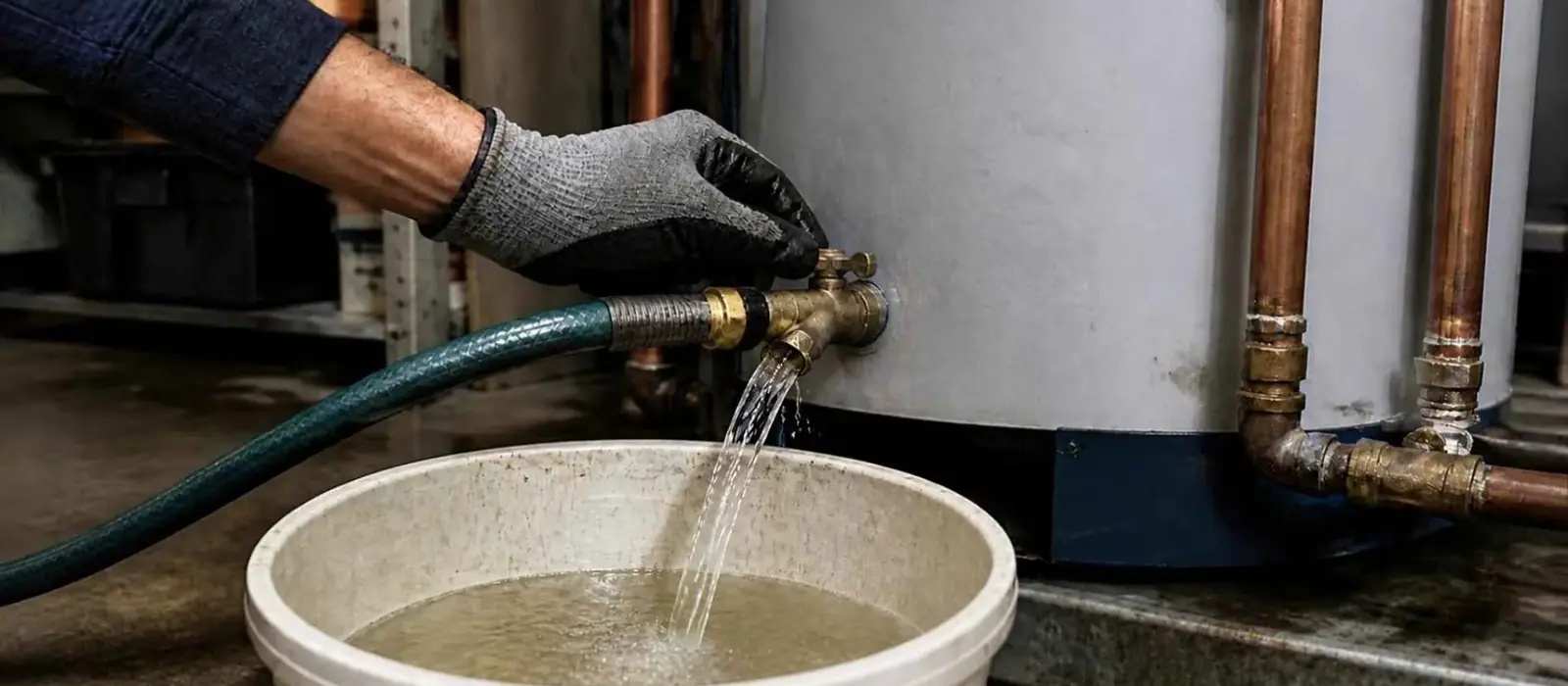
Flushing drains water from the tank through the drain valve to carry out loose sediment. Turn off gas or power first, close the cold supply, connect a hose to the drain valve and open a hot faucet inside. Drain until the water runs clear.
Then close the valve, open the cold supply, let the tank refill with the hot faucet open, and restore gas or power. Do not skip the last step. A tank that heats while empty can be ruined.
How often to flush
A tank that has never been flushed in a decade may have sediment cemented in place, and opening an old valve can create a leak. In that case, call before you try.
| Situation | Suggested interval | Note |
|---|---|---|
| New tank, light use | Yearly | Establish a routine early. |
| Noisy tank, never flushed | Flush now, then yearly | May not clear hard sediment. |
| Tank over ten years old | Ask a plumber first | Old drain valves can fail when opened. |
| Tankless unit | Descale per manufacturer | See tankless page. |
Gas versus electric noises
Gas heaters pop more often because the burner heats through a sediment layer from below. Electric heaters tend to whine or sizzle when sediment covers a lower element, and they may trip the breaker or heat unevenly.
If you have an electric heater and the water runs lukewarm, the lower element may be failing. A plumber tests the elements with a meter and replaces the bad one.
Anode rods and long life
A tank has a sacrificial rod that corrodes in place of the steel. Once the rod is used up, the tank itself starts to rust. Checking it every few years can add years to the heater, though the access varies by model.
A plumber can pull the rod and tell you how much is left. If it is mostly gone, replacing it is far cheaper than replacing the tank.
Safety valve and pressure warnings
The temperature and pressure relief valve is the last safety device on a water heater. It opens when pressure or temperature goes too high. A valve that drips occasionally may be reacting to thermal expansion, and one that runs steadily needs attention.
Never cap or plug the discharge pipe. If the valve opens and steam or very hot water comes out, shut off gas or power and call a plumber. A heater that is overheating is dangerous.
Keeping a log
Write down the date you flush the heater, the water color and how much sediment came out. A log shows trends. If each flush brings out more sediment, the tank is aging, and replacement may be on the horizon.
Photograph the data plate so you have the model and serial number in one place. It saves time when you call for service or compare replacements.
Where the maintenance guidance comes from
Manufacturer guidelines for flushing and descaling are in the manual, and they differ between brands. Gas models are built to ANSI Z21.10.1 and relief valves to ANSI Z21.22, so keep the original listing marks in mind when replacing any part.
Paso Robles note: test your tap
How much sediment your tank collects depends on your water supply. Rather than assume, test your tap or ask your water utility for its water quality report. The numbers there tell you what your heater is up against.
If your home has a water softener or filter, tell the plumber. It changes how much scale forms. See water softener service and tankless water heaters, which need descaling on a schedule.
When replacement beats flushing
A tank that is loud, old and rusty is usually near the end. If you have a leak, see water heater replacement.
We service water heaters in Paso Robles, Templeton and Atascadero. Call (805) 249-7135 any hour.
Questions people ask
Sediment on the tank bottom traps water, which boils and pops. Flushing usually helps.
Usually it is sediment, but banging, hissing with water on the floor or a leak should be checked right away.
Once a year is a common routine. Ask a plumber before flushing an old tank.
Sediment depends on your supply. Check your utility water quality report and test your tap rather than assume.
Not sure what you are looking at? Dispatch will talk it through at any hour. Call (805) 249-7135