
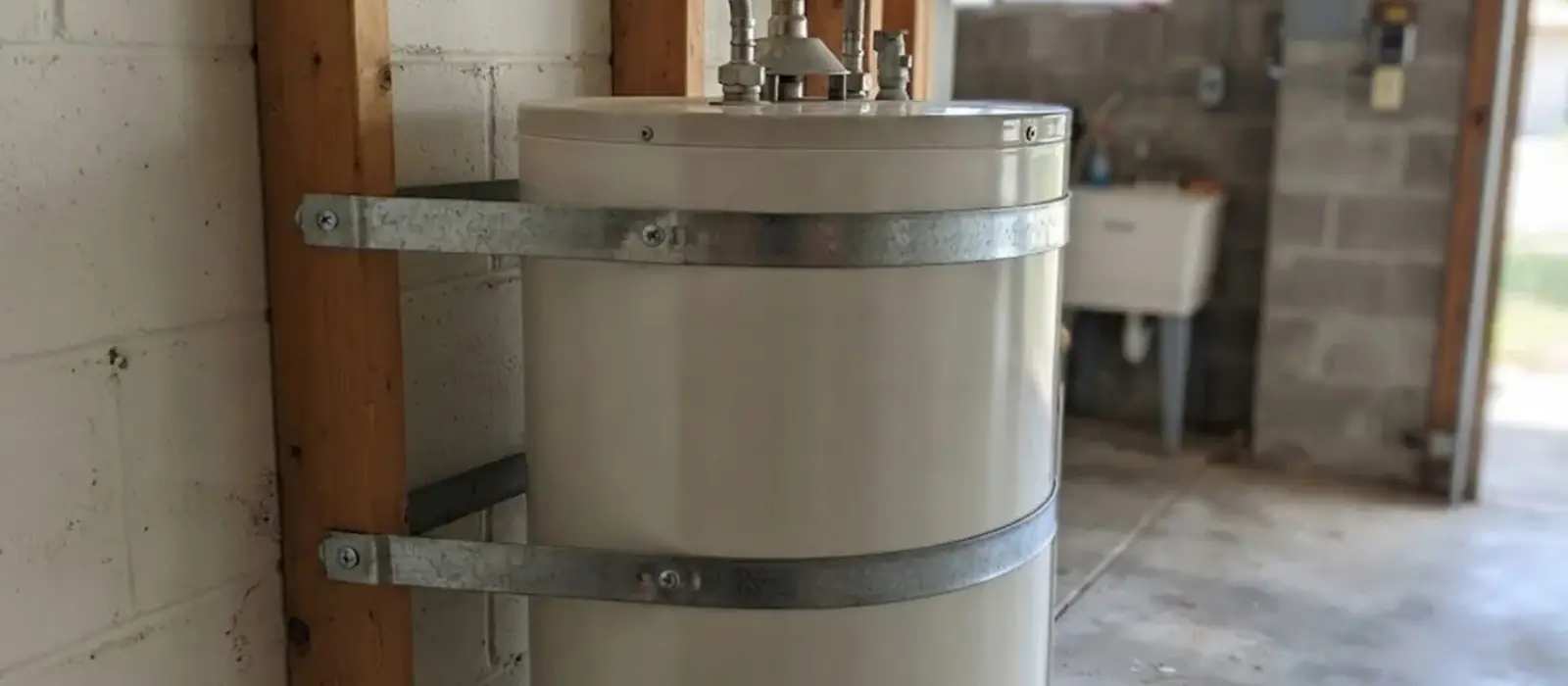
A thermocouple is a small metal probe that sits in the pilot flame of a gas water heater. It generates a tiny electric current when hot, and that current holds the gas valve open. If the flame goes out, the probe cools, the current stops and the valve closes, which prevents raw gas from leaking into the room.
When the thermocouple weakens, the pilot lights while you hold the button, then goes out when you let go. That is the classic symptom. This guide covers how it works, how the replacement is done and what to do first if you smell gas.
Gas smell comes first
If you smell gas, do not light anything and do not try to fix the heater. Leave the building, then call the gas utility or 911 from outside. Never call a plumber from inside a house that smells of gas.
Only after the smell is gone and the utility says it is safe should you consider any repair. A pilot that will not light is not itself an emergency, but a gas smell is.
How a thermocouple fails
Over time the tip of the probe gets coated with soot or the metal wears out and generates less current. It may also be bent away from the flame. A dirty tip can sometimes be cleaned with fine abrasive paper, which is why a cleaning is worth trying first.
If cleaning does not help, the part is replaced. Thermocouples are cheap, and replacement kits come in standard lengths that match most gas water heaters.
Pilot out versus other causes
The table separates the part that is cheap to replace from symptoms that point to a failing gas valve or venting problem, which should not be a DIY job.
| Symptom | Likely cause | Next step |
|---|---|---|
| Pilot lights, dies when button released | Weak thermocouple | Clean or replace. |
| Pilot will not light at all | Gas supply or blocked orifice | Plumber. |
| Pilot flame is yellow and flickers | Dirty burner or poor air | Plumber. |
| Burner will not fire, pilot stays lit | Control valve or thermostat | Plumber. |
| Water takes long to heat | Sediment or undersized tank | See repair page. |
The replacement in order
Turn the gas control to the off position and wait at least five minutes. Close the gas shutoff on the supply line, then open the burner access panel. Unscrew the thermocouple nut from the gas control and slide the probe out of its bracket.
Install the new probe, tighten the nut by hand plus a quarter turn, then reopen the gas and relight the pilot following the label on the heater. Check for gas smell around the fittings before leaving the area.
When the heater itself is the problem
A tank that is old, rusting or leaking should not get a new thermocouple. The part is cheap but the labor is not worth spending on a tank at the end of its life. Check the date on the data plate, which encodes the manufacture year in the serial number.
If the tank is about a decade old or more, planning a swap through water heater replacement often costs less in the long run than repeated repairs. A tankless unit is another option, covered on the tankless water heater page.
Safety checks after any gas repair
After a repair, check for gas smell around the fittings and the base of the heater. A soapy water solution brushed on a joint will bubble if gas is escaping. If you see bubbles or smell gas, turn off the supply and call the utility.
Make sure the area around the heater is clear of anything flammable. Paint, gasoline and cleaning products should be stored away from a gas appliance, since their vapors can ignite.
Pilot flame color and what it tells you
A healthy pilot flame is steady and mostly blue. A yellow or orange flame with soot means poor combustion. It may signal a dirty burner, a blocked flue or low combustion air.
If you see a yellow flame, do not keep using the heater. A plumber or gas technician can inspect the burner and venting. Carbon monoxide risk rises with poor combustion, so a working detector near the heater is a sensible precaution.
Standards for gas heaters
Gas storage water heaters are built to ANSI Z21.10.1, and their manuals describe the relighting procedure that should be followed exactly. According to the manufacturer guidelines on the label, a pilot that will not stay lit after cleaning needs a service call.
Paso Robles note: cold mornings and venting
Paso Robles gets roughly 64 days a year at or below freezing overnight, so heaters in garages and exterior closets work hardest in winter. Check that the vent pipe and the area around the heater are clear of boxes and debris, which can block combustion air.
Many local homes also sit on propane or natural gas depending on the neighborhood, so ask whoever supplies your fuel about shutoff and smell procedures. For anything beyond a pilot relight, call (805) 249-7135.
Where to get help
We service gas water heaters in Paso Robles, Templeton and Atascadero. If your tank has no hot water at all, see water heater repair for emergency help.
Questions people ask
The thermocouple is not generating enough current to hold the gas valve open. Cleaning or replacing it usually fixes it.
It is a simple part, but you are working on a gas appliance. If you smell gas or feel unsure, call a plumber.
Check the serial number date. A tank near or past a decade, or one that rusts or leaks, is better replaced.
Cold air raises demand and stresses an older tank. Keep the area around the heater clear so combustion air can flow.
Not sure what you are looking at? Dispatch will talk it through at any hour. Call (805) 249-7135