Your home has two plumbing systems. Supply pipes carry clean water in, and drain pipes carry waste out. Each uses different materials, and each material has a typical lifespan and a typical way of failing.
This guide covers the common materials, how to recognize them and what to watch for. If you suspect a pipe is failing, see repiping for the replacement options.
Supply pipes
Copper is the long-time standard. It is rigid, reddish-brown or green when oxidized, and joined with soldered fittings. It lasts many decades but can pit or develop pinhole leaks in some water chemistries.
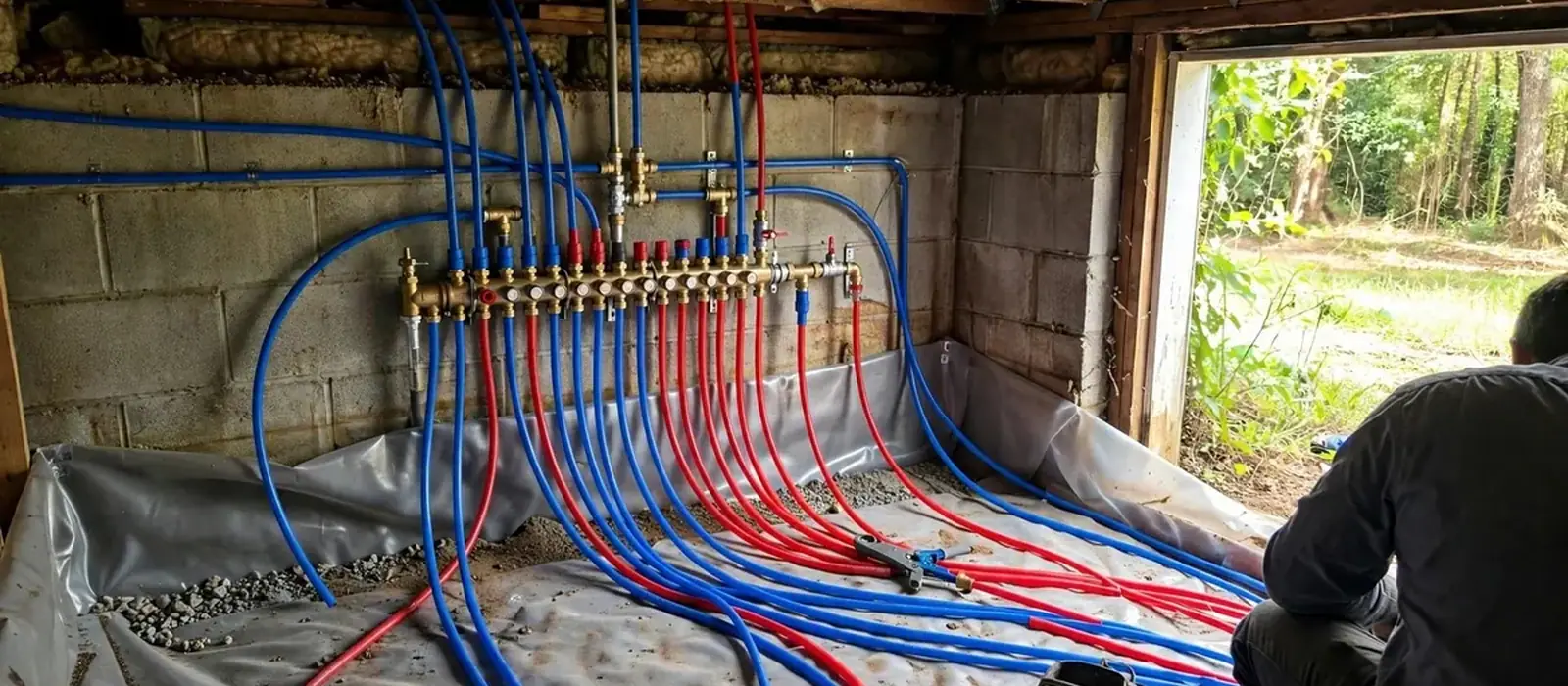
PEX is flexible plastic tubing, usually red, blue or white, joined with crimp or expansion fittings. It resists freezing damage better than rigid pipe and is common in newer homes and repipes. CPVC is a rigid cream or tan plastic that was widely used in the 1990s and later.
Older supply pipes to watch for
Galvanized steel is a gray, threaded pipe that corrodes from the inside. Water pressure drops as the bore closes with rust, and flow from the tap turns brown. Galvanized in a house built before the middle of the last century is common and nearing the end of its life.
Polybutylene is a gray or black flexible plastic used in homes from roughly the late 1970s to the mid-1990s. It is known for failing at fittings. If you find it, plan a replacement before it leaks.
- Gray threaded pipe with rust stains: likely galvanized steel.
- Flexible gray or black tubing: possibly polybutylene.
- Green crust on joints: copper with corrosion.
- Cream or tan rigid plastic: CPVC.
- Red or blue flexible tubing: PEX.
Drain, waste and vent pipes
Cast iron was the standard drain material for much of the last century. It is heavy, dark and quiet, but rusts inside and cracks at joints with age. Clay pipe was used for sewer laterals in older neighborhoods, and it is brittle and invites root intrusion.
Modern drains use PVC or ABS plastic, which is light, smooth inside and resistant to corrosion. Mixed systems, with old iron in the walls and new plastic under the yard, are common after partial repairs.
Pipe material at a glance
If you are unsure what material you have, a plumber can identify it on sight and tell you what to expect.
| Material | Typical use | Common problem |
|---|---|---|
| Copper | Supply lines | Pinholes, corrosion. |
| PEX | Newer supply lines | Fittings, sun exposure. |
| CPVC | Supply lines | Becomes brittle with age. |
| Galvanized steel | Older supply lines | Internal rust, low pressure. |
| Cast iron | Older drains | Rust, cracked joints. |
| PVC or ABS | Newer drains | Settling, loose joints. |
Why pipe type matters when you buy or remodel
Pipe material affects insurance, repair cost and the risk of leaks. Some insurers ask about polybutylene or galvanized pipe, and a remodel that touches old pipe can expose how much of it needs replacing.
If you are buying, ask for a plumbing inspection that identifies pipe types. If you are remodeling, ask the plumber what is behind the wall before demolition, since replacing the section now is cheaper than opening it again.
Mixing materials
Connecting different metals can cause corrosion. A dielectric union separates copper from galvanized steel, and its job is to slow the electrochemical reaction that eats the steel.
Plastic and metal can be joined with the right transition fittings. A plumber chooses the fitting that matches both pipes, and that choice affects how long the joint lasts.
Pipe sizes and why they matter
Pipe diameter affects flow. Supply mains in a house are commonly three-quarter inch, with half-inch branches to fixtures. Drains range from one and a half inches at a sink to three or four inches at a toilet and main line.
A pipe that is too small restricts flow, and one that is too large can let waste settle. When a plumber replaces a section, the size usually matches what was there or what the fixture requires.
Where the approved materials are listed
The California Plumbing Code, Title 24 Part 5 of the California Code of Regulations and based on the Uniform Plumbing Code (UPC), governs plumbing work in the state. It lists approved materials for supply and drain pipe. A material that was legal when your house was built may no longer be approved for new work, so ask a plumber what applies to repairs.
Paso Robles note: oldest housing near the grid
Paso Robles was laid out on a grid around what is now Downtown City Park, and older lots in that area are the most likely to have older pipe. Newer subdivisions east of the Salinas River more often use plastic. The area also has a long history of earthquake movement, including the December 22, 2003 San Simeon quake, which is why checking pipe supports and shutoffs makes sense in any age of home.
If your home has older pipe and you are seeing low pressure or discolored water, test your tap and ask your water utility about quality. A sewer inspection shows the condition of the drain side.
What to do with this information
If your home has a pipe on the risk list, you do not need to panic. Ask for an assessment and compare repair options. We serve homes in Paso Robles, Templeton and Atascadero.
The leak detection page covers what to do when a pipe has already failed somewhere you cannot see.
Questions people ask
Look at color, joints and where it enters the house. Copper is reddish, galvanized is gray and threaded, PEX is flexible tubing in red, blue or white.
It is known for failing at fittings and can leak without warning. Plan to replace it.
It can last many decades, but internal rust and cracked joints are common in older homes.
Older homes near the downtown grid are more likely to, though many have been repiped. A plumber can check yours.
Not sure what you are looking at? Dispatch will talk it through at any hour. Call (805) 249-7135