Low water pressure has many causes, and the pattern tells you where to look. If one faucet is weak, the problem is probably in that fixture. If the whole house is weak, the problem is in the supply line, a valve or the pipes.
This guide goes through the likely causes in order. For a complete pipe replacement, see repiping. For a leak in the buried line, see water line repair.
One fixture or the whole house
Start by testing several fixtures. If only one is weak, check its aerator and shutoff. Mineral buildup in an aerator or showerhead reduces flow, and cleaning it takes minutes.
If every fixture is weak, check the main shutoff to confirm it is fully open. A half-closed valve or a failed pressure regulator is a common cause of whole-house weakness.
The main valve and the regulator
Many homes have a pressure regulator near the main. It lowers street pressure to a safe level. When it fails, pressure may drop, or in some cases spike. A gauge screwed onto a hose bib shows the static pressure.
A healthy reading is within the range the plumbing is built for, and a plumber can tell you what that is. Readings far below that suggest a failing regulator, a partly closed valve or a leak.
- Check the main shutoff is fully open.
- Clean aerators and showerheads.
- Test pressure with a gauge on a hose bib.
- Look for wet spots that suggest a leak.
- Ask neighbors whether their pressure is also low.
Old pipes and leaks
Galvanized pipes corrode inside, and the opening narrows until little water passes. If your house has gray threaded pipe, a gradual loss in pressure over years is typical. The fix is replacement.
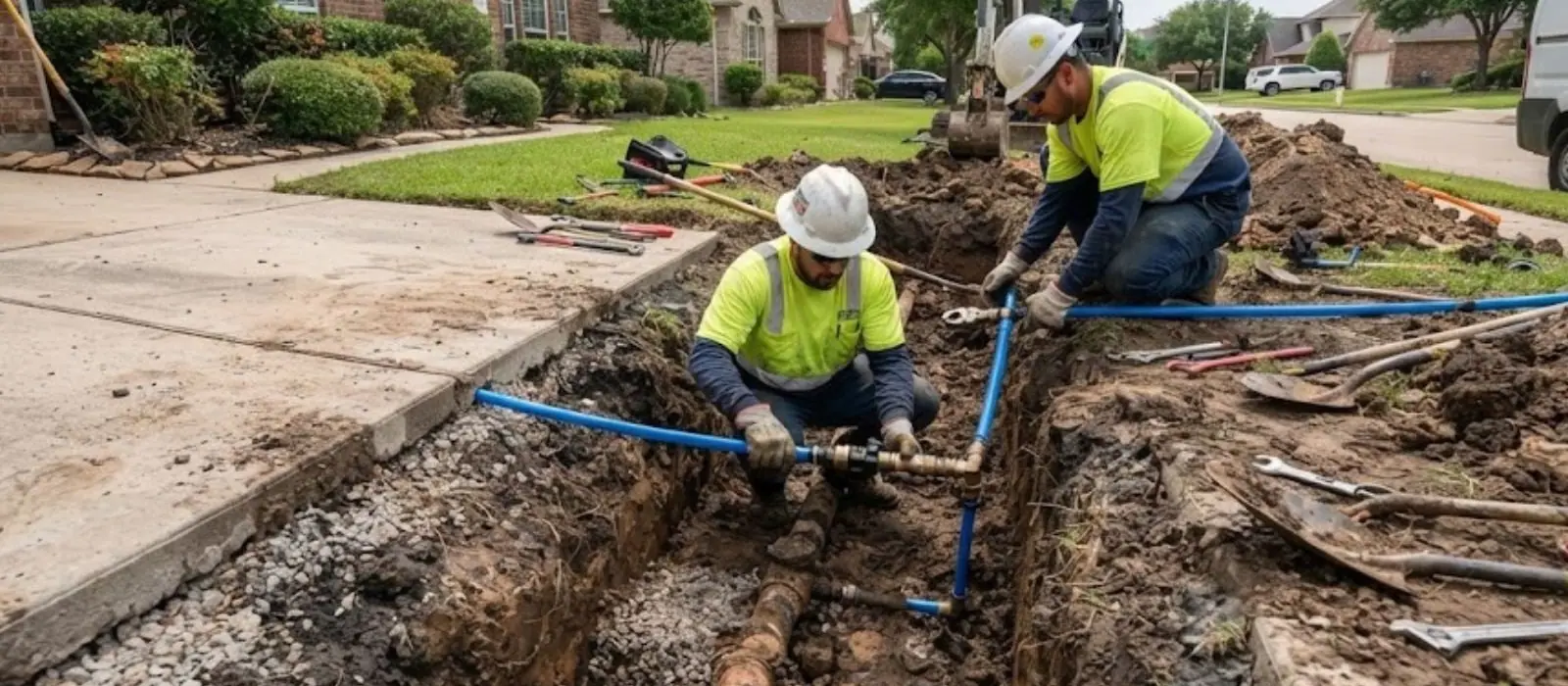
A leak in the buried line between the meter and the house also lowers pressure, because water escapes before it reaches the fixtures. The meter test in our leak detection page works for this.
Symptoms and causes
If your hot water is weak and your cold is fine, the problem is in the heater or its valves. See water heater repair.
| Symptom | Likely cause | Fix |
|---|---|---|
| One fixture weak | Clogged aerator or valve | Clean or replace. |
| Hot water weak, cold fine | Water heater valve or sediment | Service heater. |
| Whole house weak, sudden | Main valve, regulator or leak | Check valve, call plumber. |
| Whole house weak, gradual | Corroded galvanized pipe | Repiping. |
| Weak only at certain hours | Supply demand in area | Ask utility. |
Cleaning an aerator or showerhead
Unscrew the aerator from the faucet tip and rinse it. Soak it in vinegar if it has white crust, then rinse and replace. For a showerhead, soak it in a bag of vinegar for an hour and scrub the nozzles with a toothbrush.
If flow is still weak after cleaning, the problem is upstream. Check the shutoff valve under the fixture. A valve that is not fully open is a surprisingly common cause.
When pressure is too high
Too much pressure is also a problem. It strains fixtures, wears out hoses and can cause banging pipes and relief valve drips. A gauge reading well above what your fixtures are rated for means the regulator needs attention.
A plumber can test and adjust or replace the regulator. The part is small, and it protects every fixture in the house.
Pressure versus flow
Pressure is the force pushing water, and flow is the volume that arrives. A house can have good pressure and poor flow if the pipes are narrow or clogged. It can also have low pressure and decent flow if a regulator is set low.
A gauge measures pressure. A bucket and a timer at a faucet measure flow. Both numbers help a plumber find the problem, and they take a few minutes to collect.
Water heater and fixture-specific causes
If only the hot side is weak, check the shutoff valve at the water heater, then the heater itself. Sediment and a partly closed valve can restrict flow. A weak flow at a single shower may be a mixing valve cartridge clogged with debris.
If you recently had plumbing work, grit can dislodge and block a screen. Removing the aerator or checking the screen on a supply line often clears it.
When the cause is outside your property
If neighbors report low pressure too, the cause is probably in the street supply. Your water provider can check for a main repair, a closed valve or high demand in the area. Call before you spend money on your own plumbing.
If the provider says pressure at the meter is normal and you still have weak flow, the restriction is on your side of the meter. That points to your pipes, valves or regulator.
Pressure guidelines
The California Plumbing Code, Title 24 Part 5 of the California Code of Regulations and based on the Uniform Plumbing Code (UPC), governs plumbing work in the state. It sets pressure limits for fixtures and calls for a regulator when supply pressure runs high. Your water supplier can tell you the typical pressure in your zone.
Paso Robles note: supply and elevation
Water pressure depends on how your area is supplied, and homes on higher ground see less pressure than those at lower elevations. If you suspect the street supply, ask your water provider about pressure in your zone. The provider can tell you whether a work crew or a main repair is the cause.
Atascadero sits at about 879 feet and Templeton at about 807 feet, so pressure varies across the corridor. A plumber who knows the area checks your reading and says whether it is normal for your location.
When to call us
If you cannot find the cause, call (805) 249-7135. We serve Paso Robles, Templeton and Atascadero and can test pressure on the first visit.
Questions people ask
A closed valve, a failed regulator or a leak are the most common causes of a sudden drop.
Screw a pressure gauge onto an outdoor hose bib, close all other water use and read it.
Yes. Corroded galvanized pipe narrows inside and restricts flow.
Elevation and the local supply system affect pressure. Ask your water provider for typical pressure in your zone.
Not sure what you are looking at? Dispatch will talk it through at any hour. Call (805) 249-7135