A broken sewer line is one of the larger plumbing repairs a homeowner faces, and the price depends on far more than the length of the pipe. Depth, access, soil, the method used and what has to be restored afterward all matter.
This guide explains those factors without quoting numbers that would not fit your house. For an actual price, a plumber has to see the line. If you suspect a break, start with a camera inspection, which shows where it is and how bad it is.
Signs of a broken sewer line
Recurring clogs that cabling does not fix are the most common sign. Others include gurgling fixtures, sewage odor in the yard, a wet patch over the line and sudden lush growth in one strip of lawn.
A camera inspection confirms whether you have a break, a sag, roots or a collapse. Do not guess based on symptoms alone, since the repair choice depends on what the camera shows.
What decides the cost
Several factors set the price, in rough order of importance. Depth and access come first, because digging deeper or through concrete costs more. The length of the damaged section is next, then the repair method.
Depth of the pipeDeeper lines need more digging, shoring and time.
AccessLines under driveways, patios or foundations cost more to reach.
Length of damageA short spot repair costs less than replacing the whole lateral.
MethodOpen trench, pipe lining and pipe bursting each carry different costs.
RestorationConcrete, landscaping and driveway repair can add to the total.
A plumber who has seen the camera footage can give you a clear price before work starts.
Repair methods compared
Each method is explained on the sewer line repair page. The right one depends on the camera footage.
| Method | Best for | Trade-off |
|---|---|---|
| Spot repair | One short broken section | Leaves the rest of an old pipe in place. |
| Open trench replacement | Collapsed or severely offset pipe | Most digging and restoration. |
| Pipe lining | Cracked pipe with continuous path | Needs a clean, intact path. |
| Pipe bursting | Full-length replacement with little digging | Needs entry and exit pits. |
Permits, utilities and surprises
Sewer work in the public right of way or near a utility line may require a permit, and rules vary by jurisdiction. Ask the City of Paso Robles or the county, depending on your address, what is required before work starts.
Surprises come from hidden conditions: a second break farther down, a utility line crossing the trench or rock. A good plumber explains the risk before the dig and tells you what happens if conditions change.
Questions to ask each plumber
Ask which method they propose and why. Ask whether the price includes the camera inspection, the permit if one is needed and the restoration of concrete or landscaping. Ask how they handle surprises, such as a second break.
Ask how long the work will take and whether the sewer will be out of service. Ask about warranty on the work, and get the answers in writing.
Planning around the dig
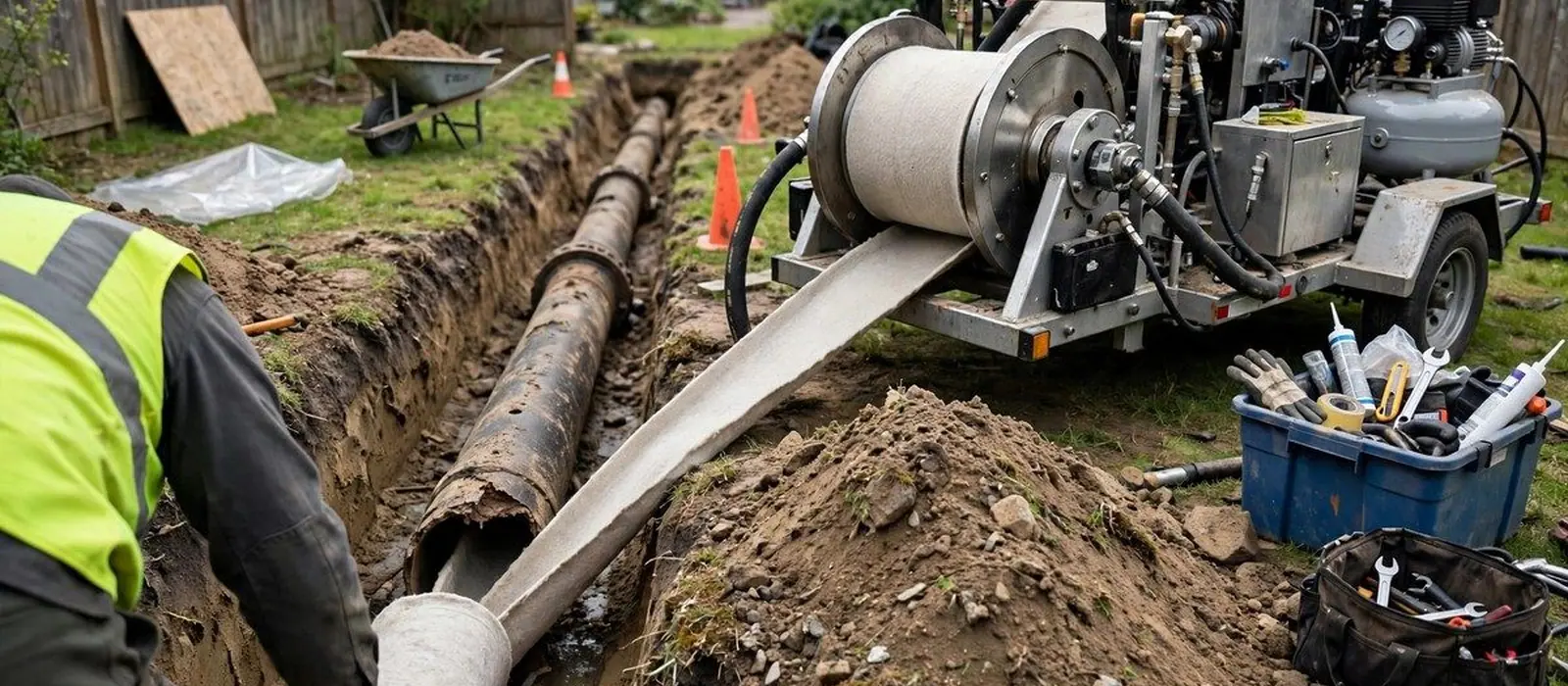
Sewer repairs mean heavy equipment in the yard. Move vehicles, patio furniture and potted plants out of the way. Tell the crew about irrigation lines and any buried items you know about.
If the repair is under a driveway, plan alternate parking. If it affects a neighbor, mention it early. A short conversation avoids surprises on a work day.
Why an inspection pays for itself
Paying for a camera inspection before a repair can feel like an extra expense. In practice it narrows the scope. A repair based on a recording targets the damaged section, while a repair based on guesswork can dig up good pipe or miss the real break.
The recording also gives you something concrete to show other plumbers and your insurer. Quotes based on the same footage are easier to compare, because every plumber is pricing the same problem.
How inspections are documented
Many inspectors code camera findings with the NASSCO PACP system. The California Plumbing Code, Title 24 Part 5 of the California Code of Regulations and based on the Uniform Plumbing Code (UPC), governs plumbing work in the state. Ask whether the report you are given follows PACP so you can compare quotes on the same footage.
Paso Robles note: who owns which part
Responsibility for the sewer line varies by agency. In general, the property owner is responsible for the lateral from the house to the connection with the main, and the utility handles the main. The line between the two is set by the sewer provider for your address, so ask the City of Paso Robles, or for Templeton, the Templeton Community Services District, before you assume.
The Templeton district operates a collection system of roughly 30 miles of mainline and treats flow at the Meadowbrook plant, according to a 2023 review published by the San Luis Obispo County LAFCO. For a Templeton address, call the district first.
How to compare quotes
Ask each plumber what method they propose, what the camera showed and what restoration is included. A low quote that leaves out concrete repair is not low. Ask for the scope in writing.
We serve Paso Robles, Templeton and Atascadero. If your sewer is backing up now, sewer line cleaning restores service until a repair is planned.
Questions people ask
A camera inspection is the reliable test. Symptoms include repeated clogs, gurgling and wet spots in the yard.
Sometimes. Lining and bursting reduce digging, but they depend on the pipe condition.
The property owner is usually responsible for the lateral. Check your policy and your utility for the dividing point.
The Templeton Community Services District operates the town collection system. Contact them to confirm where your responsibility starts.
Not sure what you are looking at? Dispatch will talk it through at any hour. Call (805) 249-7135